
Uniform federal accounting standard – Cultural institutions face the practical challenge of having to determine accounting approaches and system boundaries for their organization on a case-by-case basis. They therefore want clear rules that allow them to account for their institution’s emissions with a manageable use of resources. However, climate balances in the cultural sector, which were previously prepared individually, were often very time-consuming and, overall, neither uniform nor comparable.
Against this background, a group of experts commissioned by the Federal Government Commissioner for Culture and the Media and the Ministry of Science, Research and the Arts of Baden-Württemberg, in close consultation with the relevant committees of the Conference of Ministers of Culture, has developed a CO₂ accounting standard based on the GHG Protocol. This is an internationally recognized standard for greenhouse gas accounting by companies and organizations that can also be used by cultural institutions.
The process was moderated by Jacob Bilabel (THEMA1 GmbH and Aktionsnetzwerk Nachhaltigkeit) and Stephan Schunkert (KlimAktiv gGmbH). With this set of rules, small and large cultural institutions of all kinds throughout Germany can calculate their carbon footprints according to uniform guidelines.
Climate balance for culture – The CO₂ culture standard was discussed at the Conference of Ministers of Culture and also at the cultural policy summit between the federal government, the states, and local government associations on October 11, 2023, and its development was welcomed.
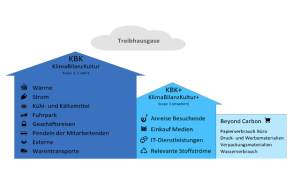
It specifies essential aspects specific to cultural institutions, particularly with regard to the system boundaries of the CO₂ balance. The CO₂ culture standard creates the conditions so that in future, individual cultural institutions will not have to grapple with the question of how to structure their CO₂ balance, but will instead be given the opportunity to easily get started with greenhouse gas calculation. Programmers of application tools can also refer to the CO₂ culture standard and thus design tools with comparable results.
To make it easier to use, an Excel tool has been developed based on the CO₂ Culture Standard, which can be used to calculate the carbon footprint for cultural institutions in accordance with the standard – the CO₂ Culture Calculator. The German (!) emission factors, which must be updated annually and used for standard-compliant calculations, are also recorded in this tool and can be viewed there. The tool offers small and large cultural institutions nationwide in all sectors a quick introduction to CO₂ accounting and can be used even without comprehensive knowledge of greenhouse gas accounting. It forms the basis for reducing and avoiding greenhouse gas emissions in institutions.
The Excel tool and instructions can be downloaded here.